
19 sep 2026
Queda
English below ↓Durante muito tempo, tive uma tendência péssima de considerar uma ideia pronta assim que encontrava uma solução que funcionasse. Às vezes isso parecia agilidade. Muitas vezes era só a ansiedade usando um crachá falso.
Escrevi esse primeiro parágrafo no passado porque, com muito esforço e fé, isso tem mudado. E creio que continuará mudando.
Na última postagem, O Desenho na Minha Cabeça, falei um pouco sobre como a pressa de chegar ao resultado atrapalhou minha relação com o desenho durante muito tempo. Desde então, tenho tentado fazer as coisas com mais calma, inclusive antes mesmo de enfrentar a temida folha em branco. Nem sempre a primeira ideia precisa virar a ideia final. Nem todo espaço vazio precisa ser preenchido imediatamente. E talvez eu não precise me livrar logo de um desenho só porque já consigo enxergar como ele pode terminar.
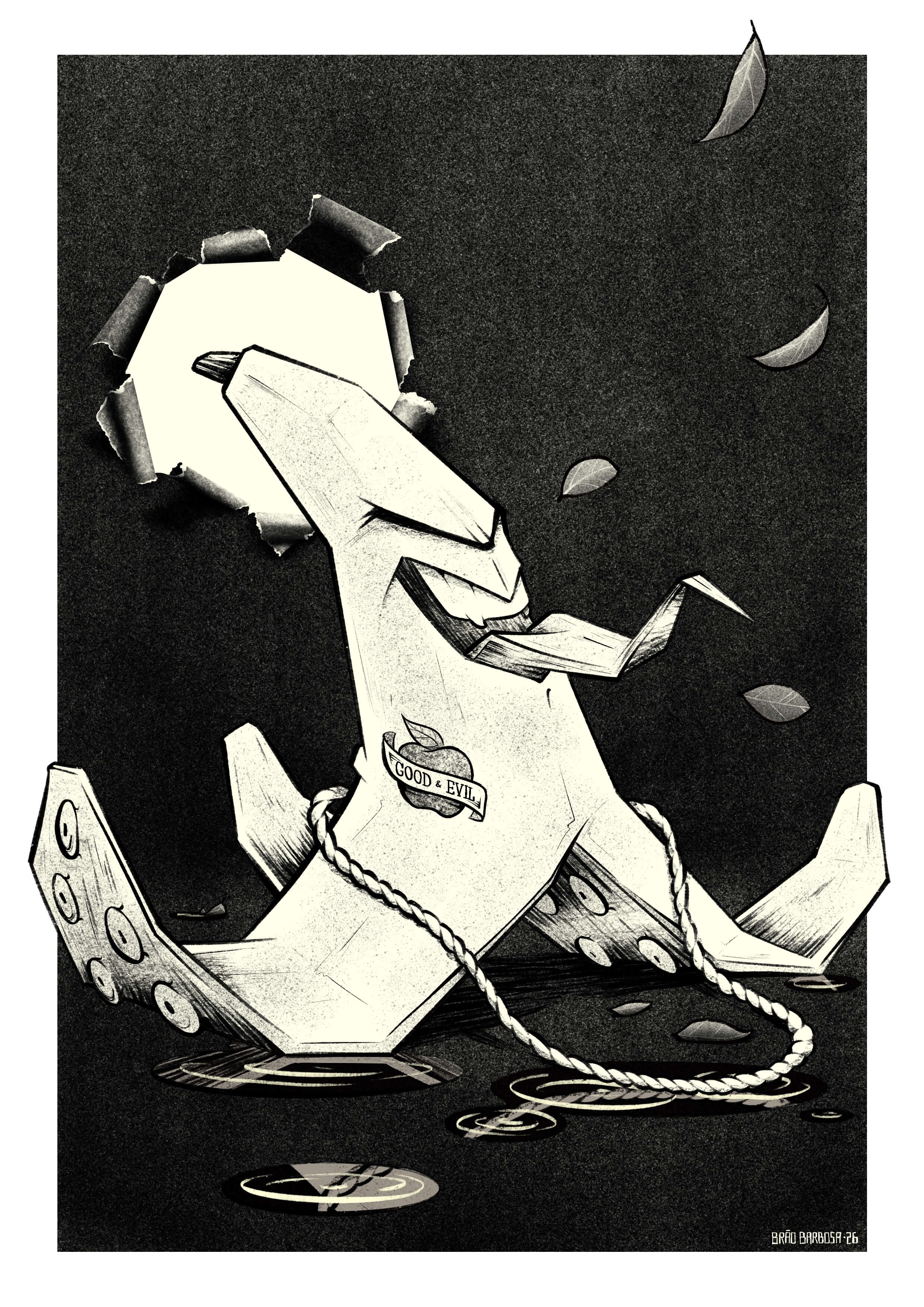
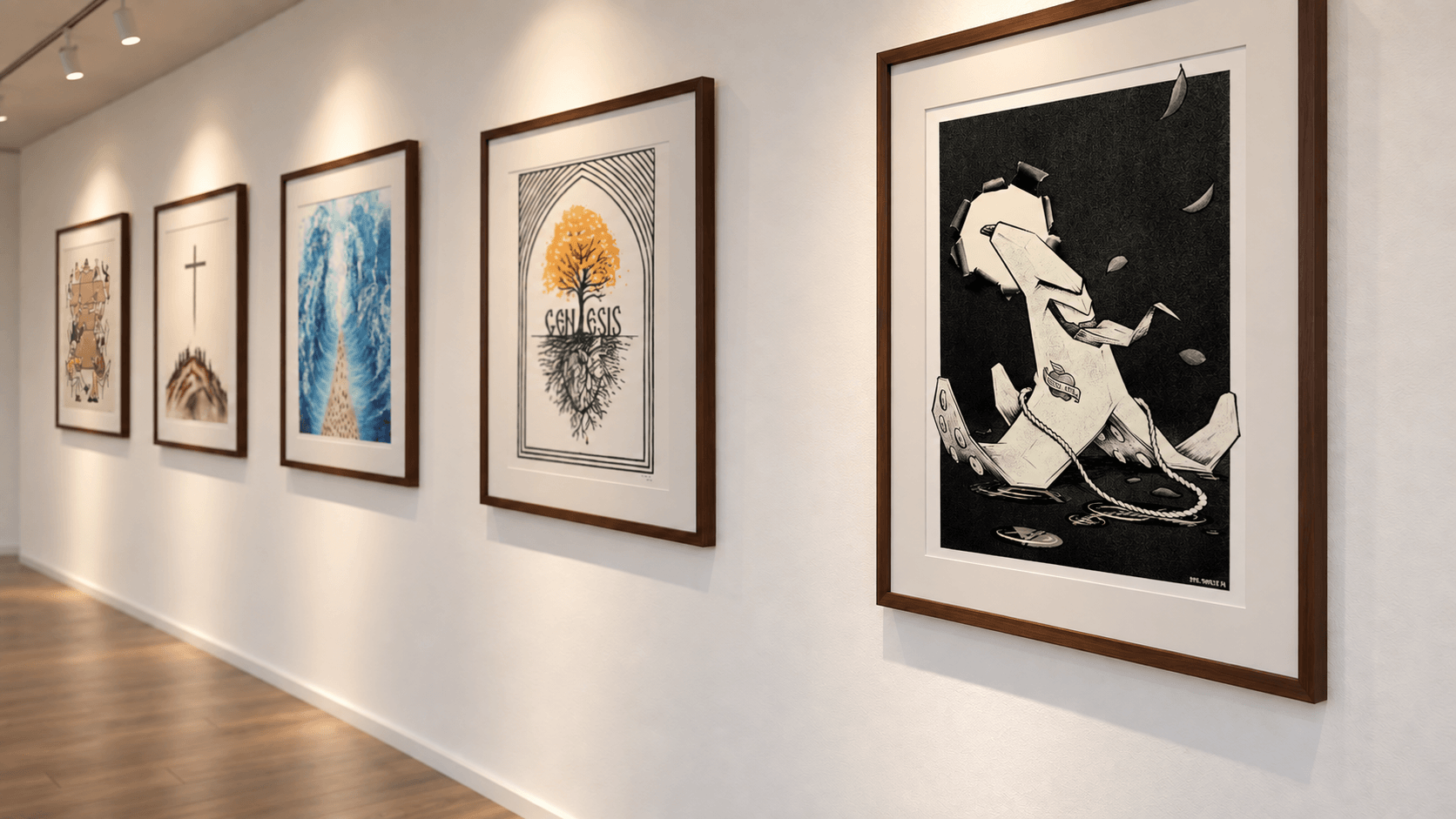
Queda foi uma encomenda dos amigos da ComViver e nasceu um pouco desse exercício de permanecer mais tempo com uma ideia e lapidá-la com mais carinho.
O ponto de partida foi a queda do homem, em Gênesis 3. É um tema que envolve tentação, ruptura, culpa e morte. Naturalmente, decidi representar tudo isso com uma banana.
Talvez não seja a escolha mais convencional, mas foi justamente esse contraste que me interessou. A banana já traz consigo uma das imagens mais bobas e reconhecíveis de queda. Basta uma casca no chão para a gente imaginar alguém escorregando, mesmo que isso aconteça com muito mais frequência nos desenhos animados do que na vida real. Colocar essa figura quase pastelão no centro de um assunto tão pesado abriu o caminho para o resto da imagem.
A partir daí, comecei a perseguir a palavra “queda”. Não apenas o acontecimento bíblico, mas as outras imagens, expressões e sentidos que cabem dentro dela. Algumas associações vieram rápido. Outras apareceram enquanto eu desenhava. Houve detalhes que acrescentei, retirei, reposicionei e transformei até que conversassem entre si sem precisar dizer a mesma coisa.
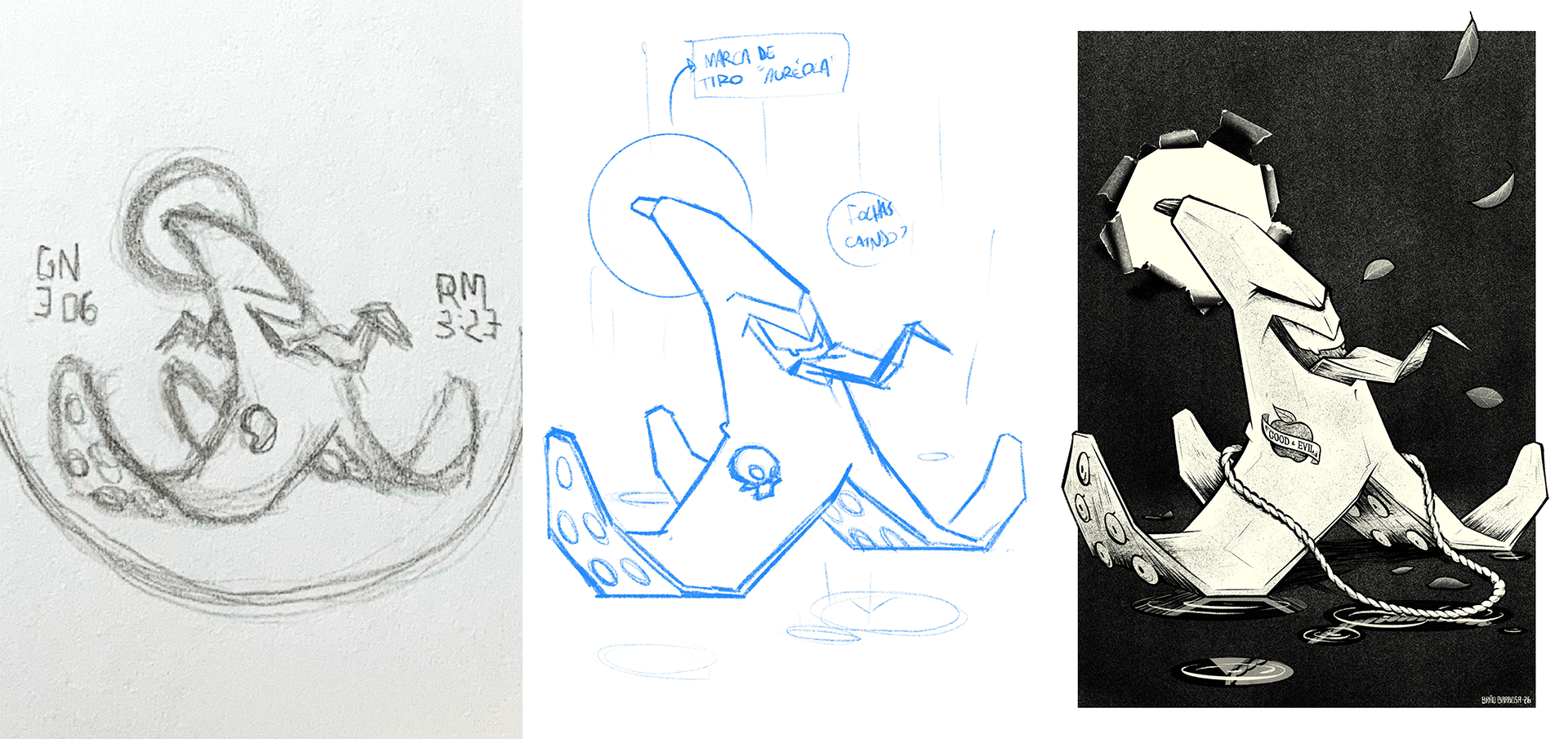
O desenho foi se formando dessa maneira, por acúmulo e por insistência. Há referências bíblicas, jogos de linguagem, pequenas ameaças, pistas falsas e elementos que talvez sejam percebidos só numa segunda olhada. Algumas relações são bem diretas. Outras são mais pessoais. E provavelmente há coisas ali que alguém vai interpretar de uma forma em que eu nunca pensei.
Gosto disso.
Eu poderia explicar cada elemento e montar uma espécie de legenda da imagem. O problema é que isso reduziria o desenho a uma lista de respostas corretas. Não era essa a intenção. Os detalhes foram colocados por um motivo, só que esse motivo não precisa limitar o que outra pessoa encontra neles. A minha leitura está na origem da imagem, mas não precisa ser o fim dela.
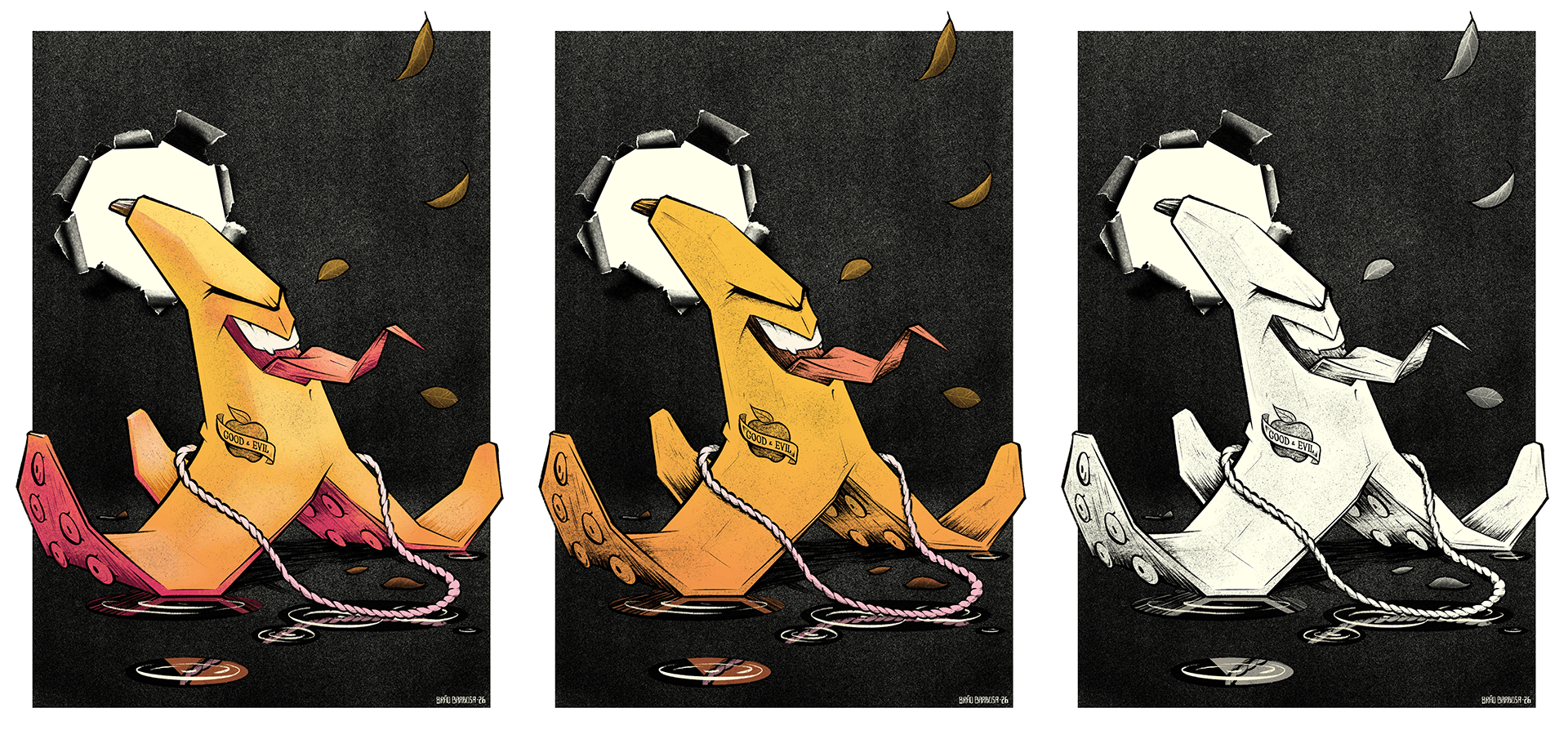
O que mais me interessa nesse trabalho, olhando agora, é perceber que consegui não ter tanta pressa. Em outros momentos, talvez eu tivesse parado assim que a piada da banana funcionasse. Desta vez, continuei. Fui procurando relações, testando possibilidades e dando tempo para que a ideia ganhasse outras camadas.
Isso não significa que venci a ansiedade e agora desenho serenamente enquanto passarinhos pousam no meu ombro. Continuo querendo chegar logo ao fim. Continuo precisando me policiar para não confundir velocidade com progresso.
Mas Queda me parece um pequeno avanço. Gosto do resultado, claro, mas o principal é ter conseguido ficar dentro da ideia por mais tempo antes de considerá-la pronta. É curioso que um desenho chamado Queda tenha acabado representando, para mim, uma forma de me levantar.
Fall
For a long time, I had a terrible habit of considering an idea finished as soon as I found a solution that worked. Sometimes it looked like efficiency. More often, it was just anxiety wearing a fake badge.
I wrote that first paragraph in the past tense because, through a lot of effort and faith, this has been changing. And I believe it will continue to change.
In my previous post, The Drawing in My Head, I wrote a little about how the rush to reach the final result got in the way of my relationship with drawing for a long time. Since then, I’ve been trying to do things more slowly, even before facing the dreaded blank page. The first idea doesn’t always have to become the final one. Not every empty space needs to be filled immediately. And maybe I don’t need to get rid of a drawing just because I can already see how it might end.
Fall was commissioned by some friends from ComViver and grew out of this exercise of staying with an idea longer and refining it with more care.
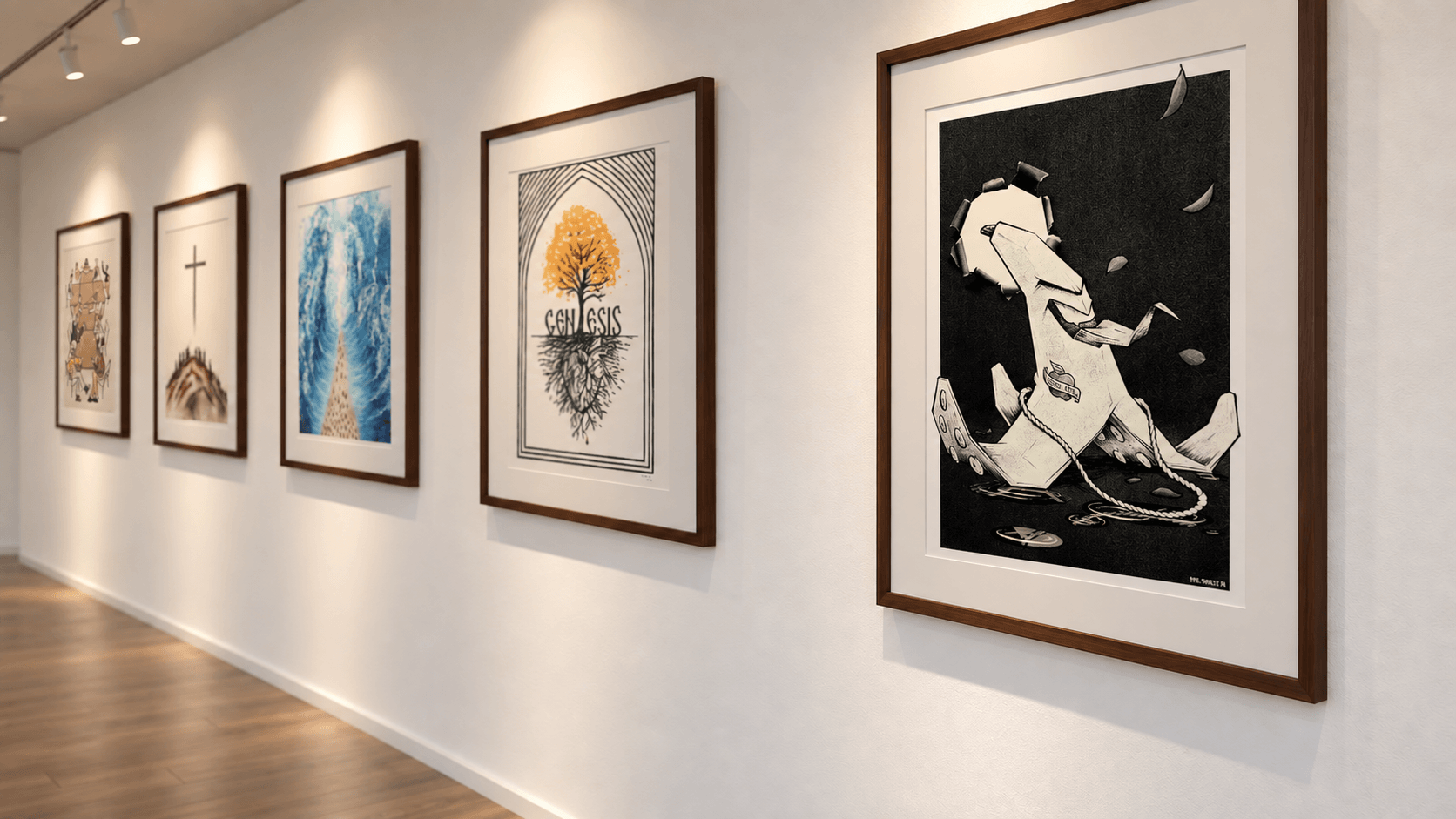
The starting point was the Fall of Man in Genesis 3. It’s a subject that involves temptation, rupture, guilt, and death. Naturally, I decided to represent all of that with a banana.
It may not be the most conventional choice, but that contrast was exactly what interested me. A banana already carries one of the silliest and most recognizable images of falling. All it takes is a peel on the floor for us to imagine someone slipping, even though that happens far more often in cartoons than in real life. Placing this almost slapstick figure at the center of such a heavy subject opened the way for the rest of the image.
From there, I began chasing the word “fall”: the biblical event, but also the other images, expressions, and meanings it could hold. Some associations came quickly. Others appeared while I was drawing. I added, removed, repositioned, and transformed details until they could speak to one another without all saying the same thing.
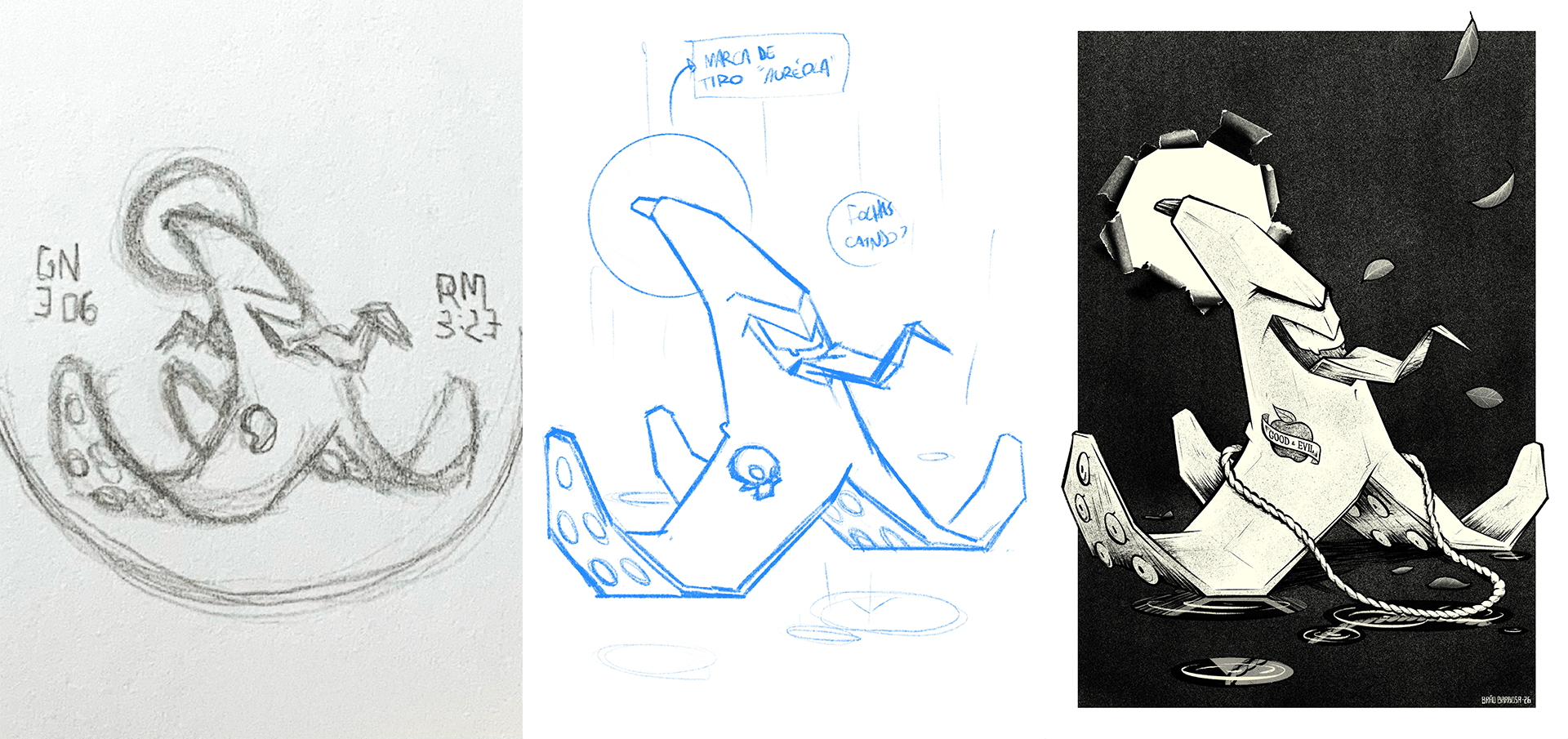
The drawing came together through that back-and-forth. There are biblical references, wordplay, hints of danger, false leads, and details you might only notice on a second look. Some connections are quite direct. Others are more personal. And there are probably things in there that someone will interpret in a way I never considered.
I like that.
I could explain every element and put together a kind of key to the image. The problem is that this would reduce the drawing to a list of correct answers. That was never the intention. The details are there for a reason, but that reason doesn’t have to limit what someone else finds in them. My reading is where the image began, but it doesn’t have to be where it ends.
What interests me most about this piece, looking at it now, is realizing that I managed not to rush it as much. At another point in my life, I might have stopped as soon as the banana joke worked. This time, I kept going. I looked for connections, tested possibilities, and gave the idea time to develop other layers.
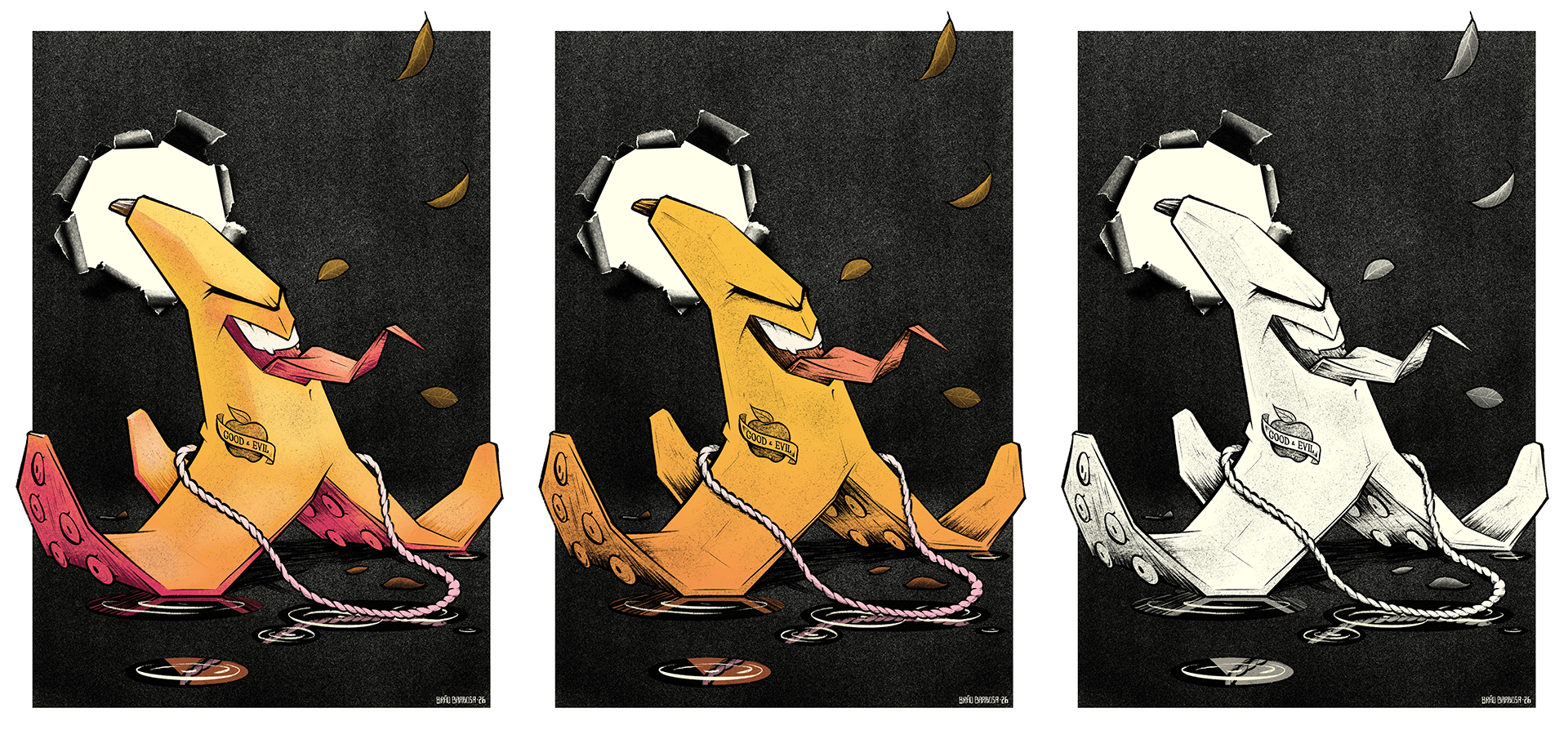
This doesn’t mean I have conquered anxiety and now draw peacefully while birds land on my shoulder. I still want to reach the end as quickly as possible. I still have to stop myself from confusing speed with progress.
But Fall feels like a small step forward. I like the result, of course, but what matters most is that I managed to stay with the idea longer before deciding it was finished. It’s curious that a drawing called Fall ended up representing, for me, a way of getting back up.